
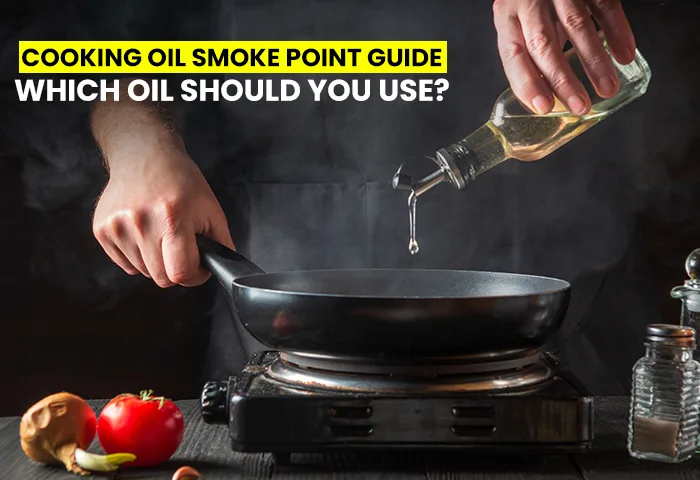
Introduction: Cooking Oil Smoke Point
An Indian kitchen is filled with diverse recipes that require different cooking styles such as tadka, deep frying, and stir-frying. But one of the biggest mistakes that people make is using the wrong oil at the wrong heat.
The smoke point of every cooking oil is different, and it can drastically affect the taste, nutritional value, and even the safety of your food. Let’s explore what the smoke point is, why it matters, and how to choose the right oil for your cooking needs.
What is Smoke Point in Cooking Oil?
Smoke point is the temperature at which cooking oil starts to break down and burn, emitting smoke and a pungent smell.
Simply put, the smoke point is the temperature at which a cooking oil begins to burn and smoke. At this stage, the oil is no longer just heating up; it is chemically degrading. Different Cooking oils have different smoke points based on the refining process they go through and their fatty acid composition.
Why Does Smoke Point Matter More Than You Think?
Indian cooking is inherently high-heat. Tadka involves heating oil to a near-smoking point deliberately to bloom spices. Deep frying requires sustained temperatures between 170°C and 200°C. Stir-frying on a high flame is standard in most households.
Using an oil with a low smoke point in these situations is not just a flavour issue; it means your oil is degrading every time you cook. Over time, that adds up.
Choosing an oil with an appropriate smoke point for your cooking style is one of the most practical decisions you can make in the kitchen, and it’s often overlooked in favour of marketing terms like “light” or “natural.”
Comparing Smoke Point of Different Oils
| Cooking Oil | Smoke Point (°C) | Best Use |
| Rice Bran Oil | ~250°C | Deep frying, stir-fry, and daily cooking |
| Avocado Oil (Refined) | ~270°C | High-heat cooking, grilling |
| Groundnut Oil | ~230°C | Deep frying, tadka |
| Sunflower Oil (Refined) | ~225°C | Frying, baking |
| Olive Oil (Extra Virgin) | ~190°C | Sautéing, salad dressing |
| Mustard Oil | ~250°C | Tadka, pickling, and Indian cooking |
| Coconut Oil (Refined) | ~200°C | Baking, light sautéing |
| Ghee | ~250°C | Tadka, roasting, and Indian cooking |
| Sesame Oil (Refined) | ~210°C | Asian cooking, stir-fry |
| Canola Oil | ~200°C | Baking, light frying |
| Flaxseed Oil | ~107°C | Cold use only – salads, dressings |
Refined vs Unrefined Oils: How It Affects Smoke Point
Unrefined or cold-pressed oils are extracted with minimal processing. They retain natural colour, aroma, and nutrients, but also retain free fatty acids and moisture that destabilise under heat. The result is lower, making them better suited for raw use or low-heat cooking.
On the other hand, refined oils go through controlled processing, degumming, neutralisation, bleaching, and deodorisation to remove impurities and free fatty acids. This significantly increases heat stability, giving refined oils a higher smoke point and longer shelf life. For high-heat Indian cooking, refined oils are the practical choice.
People Also Read: Blended Oil Vs Refined Oil, Which is Better?
Matching Oil to Cooking Method: A Practical Guide

Not every oil is suitable for everything. Every cooking method requires a different kind of oil to be at the right heat level to cook the dish to perfection. Here is a breakdown by cooking method:
-
Best Oils for Deep Frying
- Deep frying requires a high smoke point and good oxidative stability as the food is dipped in hot oil and gets fried for a while to cook properly without foaming.
- The best oils for this method: Rice bran oil, groundnut oil, and refined sunflower oil. In particular, Rice bran oil has a ~250°C smoke point and natural antioxidant content, making it particularly well-suited here. It stays stable longer, absorbs less into food, and doesn’t leave a heavy aftertaste.
-
Best Oils for Tadka and Tempering
- Tadka involves short, intense heat in which oil is brought to a high temperature quickly to bloom whole spices. The exposure time is brief, but the heat is significant.
- The best oils for this method: Mustard oil, ghee, and rice bran oil. For this method, flavour is also a big factor as Mustard oil adds a distinct sharpness, while Ghee adds richness and Rice bran oil keeps it neutral.
-
Best Oils for Stir-Frying and Sautéing
- Stir-frying and sautéing are done at medium heat and require a smoke point that stays around 180°C–220°C without smoking; however does not overpower the dish with flavour.
- The best oils for this method: Rice bran oil, refined groundnut oil, and refined sesame oil. For everyday Indian sabzi and stir-fries, rice bran oil’s neutral flavour is a reliable option. But Sesame oil is also ia a great option as it adds a mild nuttiness that works well in Asian-style stir-fries.
-
Best Oils for Baking
- Baking is a very soft process; it requires a neutral-flavoured oil that performs at moderate oven temperatures, typically 160°C–200°C. In this oil, the main focus is on flavour rather than smoke point.
- The best oils for this method: Rice bran oil, refined coconut oil, and canola oil. Rice bran oil’s light texture makes it a good substitute in cakes, muffins, and flatbreads without altering the final taste.
People Also Read: Best Oil for Deep Frying
Is a Higher Smoke Point Always Better?
Not always. A high smoke point means the oil handles heat well, but it does not automatically make it the best choice for daily cooking. Several other factors matter just as much:
- Smoke Point: Does it suit your cooking method (frying, tadka, sautéing)?
- Oxidative Stability: Does it resist breaking down and turning rancid over time?
- Fatty Acid Balance: Does it offer a healthy ratio of MUFA and PUFA for daily use?
- Nutrient Content: Does it bring any added value, such as Vitamin E or antioxidants?
- Flavour: Is it neutral enough for versatile everyday cooking?
- Affordability: Can you use it consistently without it being a premium purchase?
Why Rice Bran Oil Stands Out for Indian Cooking?
Indian cooking is demanding on oil. High flames, prolonged frying, repeated tadka, most oils struggle to keep up consistently. Rice bran cooking oil handles it well, and here’s why:
- Smoke Point: A high smoke point of ~250°C covers every cooking method in an Indian kitchen.
- Gamma Oryzanol: A natural antioxidant unique to rice bran.
- Vitamin E: It supports the oil’s oxidative stability.
- Balanced MUFA & PUFA: A healthy fat profile for daily use.
- Light texture: It does not feel heavy on food and doesn’t leave an oily aftertaste.
Not all rice bran oil is refined to the same standard. A well-refined product retains Gamma Oryzanol and Vitamin E while achieving a consistent smoke point. SVR Gaia’s refining process is built around exactly this: heat performance and nutrient retention, together.
People Also Read: Best Rice Bran Oil in India
Conclusion: Cooking Oil Smoke Point
Smoke point is not just a technical detail; it directly affects the taste, nutrition, and safety of the food you cook every day. From deep frying and tadka to sautéing and baking, using the right oil for the right cooking method helps maintain flavour while reducing the breakdown of harmful compounds caused by overheating.
For Indian cooking, where heat levels are high, and the same oil is used across multiple methods daily, that balance is everything. Rice bran oil checks those boxes practically and reliably: high smoke point, balanced nutrition, light texture, and a refining process that retains what matters.
Choosing a well-refined and trusted product is equally important. A quality-focused brand like SVR Gaia ensures that the oil maintains both heat stability and nutrient retention, helping households cook with greater confidence every day.
FAQs: Cooking Oil Smoke Point
1. Which oil has the highest smoke point for cooking?
Ans: Avocado oil refined has the highest smoke point, reaching approximately ~271°C.
2. What oil is best for diabetics?
Ans: Rice bran oil is the best for diabetics as it may help improve insulin sensitivity and maintain stable blood sugar levels.