

Introduction to Rice Bran Oil Vs Canola Oil
Oils are an important ingredient in the Indian kitchen; they add flavour to every dish made with them. Oils are a flavour enhancer that elevates the flavour of Indian dishes made in the kitchen, like butter paneer, aloo gobi, or even non-veg dishes such as butter chicken.
However, with the increasing awareness of health and fitness, many people are neglecting unhealthy oils that contribute to weight gain or poor health. Oils like rice bran oil and canola oil are famously known for their better nutritional value, which is why, in this blog, we will compare rice bran oil vs canola oil to get you the best.
What is Rice Bran Oil?
The oil extracted from the bran of rice grains is known as rice bran oil. The rice bran oil is known for its neutral flavour, nutritional value, and skin benefits.
Rice bran oil is a famous cooking oil; it has many nutritional benefits, being a good source of antioxidants like omega-3 and omega-6, gamma-oryzanol, vitamins E, A, and D, MUFA, and PUFA.
What is Canola Oil?
Canola oil is a popular oil derived from rapeseed, also known as Brassica napus, specifically bred to have low levels of erucic acid, making it safe and mild-tasting for consumption.
Canola oil is low in saturated fat, rich in monounsaturated fats, and provides omega-3 and omega-6 fatty acids. It has a neutral taste, good for Indian cooking. It is also commonly used in Western packaged food.
People Also Read: How to Discard Old Cooking Oil
Nutritional Comparison of Rice Bran Oil vs Canola Oil
| Nutritional Factors | Rice Bran Oil | Canola Oil |
| Calories(Per 100g) | -884 Kcal | -884 Kcal |
| Saturated Fats | 24% | 7% |
| Monosaturated Fats(MUFA) | 38% | 63% |
| Polysaturated Fats(PUFA) | 37% | 28% |
| Omega-3 Fatty Acids | Small Content | Higher Content |
| Omega-6 Fatty Acids | Balanced Amount | Higher than Omega-3 |
| Gamma-Oryzanol | Yes | No |
| Vitamin-E | High | Moderate |
| Antioxidants | High | Low |
| Smoke Point | -232 C | 204 C |
| Cholestrol Management | Helps Lower LDL & Increase HDL | Supports Heart Health When Eaten Moderately |
Health Benefits: Rice Bran Oil vs Canola Oil
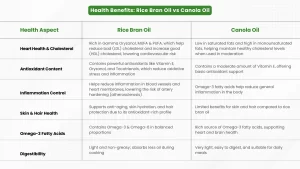
Both rice bran oil and canola oil have their own health benefits, making them better than one another, which is why it is important to analyse both of these oils properly:
Health Benefits of Rice Bran Oil
Rice bran oil is known for its multipurpose properties, helping your heart, body, skin, and hair. Below are the key health benefits of rice bran cooking oil explained:
- Heart Health & Cholesterol Balance: Components like oryzanol and MUFA, PUFA decrease bad (LDL) cholesterol and increase good (HDL) cholesterol, and other antioxidants like tocotrienols all contribute to better cholesterol levels and reduced cardiovascular risk.
- Rich in Antioxidants: Rice bran cooking oil contains antioxidants like vitamin E and oryzanol, which fight oxidative stress and reduce inflammation. It also helps with inflammation in your blood vessels and heart membrane, which, if not treated, can trigger atherosclerosis, the hardening and narrowing of the arteries, leading to heart disease.
- Supports Skin & Hair Health: Rice bran oil offers a variety of hair and skin benefits. Maintaining your skin and hair health has become easy with rice bran oil, which is rich in antioxidants and is a good addition to your skincare and haircare routine. It is beneficial for your anti-ageing issues, moisturises the skin, and protects the skin and hair from environmental damage.
Health Benefits of Canola Oil
Canola oil is often considered a heart-friendly cooking oil due to its balanced fat profile and light texture. Below are the key health benefits of canola cooking oil explained:
- Supports Heart Health: Canola oil is low in saturated fats and high in monounsaturated fats, which decreases bad (LDL) cholesterol and increases good (HDL) cholesterol. This balance supports overall cardiovascular health when used in moderation.
- Rich in Omega-3 Fatty Acids: Compared to many oils, canola oil is high in omega-3 fatty acids, which help reduce inflammation, support brain function, and promote heart health.
- Light and Easy to Digest: Canola oil has a light consistency and mild taste, making it easy to digest. It does not feel heavy on the stomach and suits everyday cooking needs.
People Also Read: Cottonseed Oil Vs Rice Bran Oil
Cooking Uses & Taste of Rice Bran Oil Vs Canola Oil
In a country like India, where people prioritise taste instead of health, it is important for the better oil to also have a better taste and cooking uses.
How Rice Bran Oil Performs in Cooking
Rice bran is considered one of the best for Indian cooking due to its neutral flavour and high smoke point, making it best for frying and sautéing Indian dishes. Here are some detailed points:
- Neutral Flavour: Rice bran oil has a very mild flavour, which does not overpower the food’s flavour, making it suitable for daily Indian cooking.
- High Smoke Point: It has a high smoke point of 232°C, making it suitable for frying, roasting, and stir-frying without breaking down.
- Less Oil Absorption: Rice bran oil absorbs less oil and blends smoothly with spices and sauces, making meals lighter, healthier, and more flavorful.
How Canola Oil Performs in Cooking
Canola oil is widely used in everyday cooking because of its mild flavour and versatility. To know further details, here are some points:
- Mild Flavour: Canola oil has a mild taste that allows the flavour of other ingredients to shine, making it suitable for a variety of cuisines and recipes.
- Moderate Smoke Point: In comparison to rice bran oil, canola oil has a moderate smoke point of 200°C and is suitable for sautéing, shallow frying, stir-frying, baking, and grilling.
- Light Texture: Canola oil also has a light texture and spreads evenly in cooking, resulting in less-greasy dishes. This makes it a popular choice for daily meals, salad dressings, marinades, and baked goods.
People Also Read: Blended Oil Vs Refined Oil
Pros and Cons of Rice Bran Oil
Pros of Rice Bran Oil
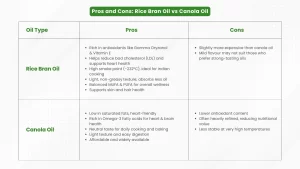
- Rich in antioxidants like Gamma Oryzanol and Vitamin E
- Helps reduce bad cholesterol (LDL) and supports heart health
- High smoke point (around 232°C), ideal for Indian cooking methods
- Light, non-greasy texture; absorbs less oil during frying
- Balanced MUFA and PUFA ratio for overall wellness
- Supports skin and hair health
Cons of Rice Bran Oil
- Slightly more expensive than canola oil
- Mild flavour may not suit those who prefer strong-tasting oils
Pros and Cons of Canola Oil
Pros of Canola Oil
- Low in saturated fats, making it heart-friendly
- Contains Omega-3 fatty acids that support heart and brain health
- Neutral taste suitable for everyday cooking and baking
- Light texture and easy digestion
- Widely available and affordable
Cons of Canola Oil
- Lower antioxidant content compared to rice bran oil
- Often heavily refined, which may reduce nutritional value
- Less stable at very high temperatures compared to rice bran oil
Conclusion: Which is better, rice bran oil or canola oil?
Both rice bran oil and canola oil have their pros and cons, making them suitable for different beings. One is good for health, skin, and Indian cooking, while the other is good for light texture and affordability. But, if we take a look at all the benefits, we can confidently conclude that rice bran oil is better than canola oil.
Choosing the right cooking oil from the right seller can help in long-term goals and benefit your body.
To ensure you’re using the purest, highest-quality rice bran oil, explore the premium products offered by SVR Gaia. For any inquiries or product details, contact us today.
FAQs Related to Rice Bran Oil Vs Canola Oil
1. Is rice bran oil healthy or not?
Ans: Yes, rice bran oil is healthy. It has many health benefits, like anti-ageing, hair growth, and cardiovascular benefits, like increasing HDL and decreasing LDL cholesterol.
2. Which oil is better, sunflower or groundnut or rice bran?
Ans: Rice bran oil is better than both sunflower oil and groundnut oil due to its high nutritional value and neutral taste.
3. What is canola oil called in India?
Ans: Canola oil is called rapeseed oil (Sarso ka tel) in India.
4. What is healthier, rice bran oil or canola oil?
Ans: Rice bran oil is considered healthier than canola oil.
5. Which is better, rice bran oil vs. canola oil, for frying?
Ans: Rice bran oil is better for frying due to its higher smoke point than canola oil.