Introduction: Why Rice is More Than Just a Staple Food
Rice is a very important source of carbs, used in almost all countries, and is most famous in Asia as a part of their every meal. Rice is considered the third main cereal crop on the planet; it has a great capacity to adapt to different soil and climate conditions.
The affordability, versatility, and nutritional value of rice make it a preferred food source across different regions and communities. But the benefits of rice go beyond the grain. During the rice milling process, several valuable by-products are generated, including rice bran, rice bran oil, rice bran lecithin, de-oiled rice bran, and rice bran wax.
In this blog, we will explore the nutritional benefits of rice and discover how its by-products contribute to health, sustainability, and various industries around the world.
Nutritional Value of Rice
Nutritional Value of Cooked White Rice (Per 100g):
| Nutrient | Approximate Value |
| Calories | 130 kcal |
| Carbohydrates | 28 g |
| Protein | 2.7 g |
| Fat | 0.3 g |
| Fiber | 0.4 g |
| Iron | 0.2 mg |
| Magnesium | 12 mg |
Benefits of Rice
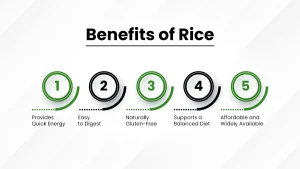
Here are the benefits of rice:
1. Provides Quick Energy
Rice is a great source of carbohydrates, which helps energize the body. It helps in maintaining energy levels and supports daily physical and mental activities, making it an important part of a balanced diet.
2. Easy to Digest
Rice is gentle on the digestive system and is often recommended for people to eat with dahi(curd) when recovering from illness or experiencing digestive discomfort. Its light texture makes it suitable for children, adults, and older individuals alike.
3. Naturally Gluten-Free
Rice is naturally free from gluten, making it an excellent food choice for individuals with gluten intolerance or celiac disease. It provides a safe and nutritious alternative to wheat-based foods.
4. Supports a Balanced Diet
Rice is a very balanced food product that matches with any vegetables, pulses, dairy products, and protein-rich foods, helping create complete and balanced meals.
5. Affordable and Widely Available
As one of the most widely cultivated grains in the world, rice is affordable and accessible to millions of people. Its long shelf life and versatility make it a staple food in households across different regions and cultures.
Understanding Rice Processing and Its Types
The process of getting rice begins with paddy rice, which is harvested from the fields and then sent for milling. During milling, the outer layers of the grain are removed to produce edible rice.
This process not only prepares rice for consumption but also generates valuable by-products such as rice bran, rice bran oil, and de-oiled rice bran, which are widely used across various industries.
Types of Rice
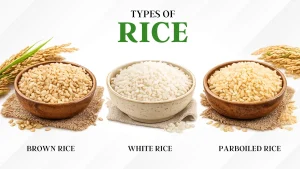
- Brown Rice: Brown rice is the least processed type of rice. In brown rice, only the outer husk is removed, while the bran and germ layers remain, helping retain more fiber, vitamins, and minerals.
- White Rice: White rice is the most commonly used type of rice. It is produced by removing the husk, bran, and germ layers, giving it a softer texture, longer shelf life, and faster cooking time.
- Parboiled Rice: Parboiled rice is partially boiled in the husk before milling. This process helps transfer some nutrients from the bran into the grain and results in firmer, less sticky rice after cooking.
How Rice By-Products Are Generated
During the above process, many other products were also gained from the grain of the rice:
- Rice Bran Oil: A nutrient-rich cooking oil.
- Rice Bran Lecithin: A natural emulsifier used in the food and feed industries.
- De-Oiled Rice Bran (DORB): Commonly used in animal nutrition.
- Rice Bran Wax: Used in cosmetics, pharmaceuticals, and industrial applications.
This efficient utilization of every part of the rice grain makes rice processing an important contributor to both nutrition and sustainable industrial development.
Major By-Products of Rice and Their Benefits
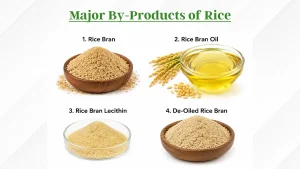
Here are the major byproducts of rice:
Rice Bran
Rice bran, also known as De-oiled Rice bran, is the outermost layer of rice, which is removed during the rice milling process. It contains dietary fiber, essential fatty acids, vitamins, minerals, and antioxidants.
Benefits of Rice Bran:
- Rich source of dietary fiber that supports digestive health.
- Contains antioxidants that help reduce oxidative stress.
- Used in health foods, supplements, and animal nutrition products.
Rice Bran Oil
Rice bran oil is an oil that is extracted from rice bran. It is becoming famous in India due to its health benefits. It is rich in Gamma Oryzanol, Vitamin E, and balanced levels of MUFA and PUFA.
Benefits of Rice Bran Oil:
- Rice bran oil may help with weight loss as it is a light and easy-to-digest oil for daily use.
- Supports heart health by helping maintain healthy cholesterol levels.
- It also has a high smoke point, which is ideal for frying, sautéing, and daily Indian cooking.
Rice Bran Lecithin
Rice bran lecithin is a natural emulsifier obtained during rice bran oil processing. It is commonly used to feed animals and in industrial applications.
Benefits of Rice Bran Lecithin:
- Supports animal nutrition and feed formulations.
- Used as a plant-based alternative to soy lecithin.
Rice Bran Wax
Rice bran wax is a natural wax obtained during the refining of rice bran oil. It is valued for its purity, stability, and eco-friendly properties.
Benefits of Rice Bran Wax:
- Used in cosmetics such as lip balms, creams, and lotions.
- Serves as a natural ingredient in candles and polishes.
- Finds applications in pharmaceutical and personal care products.
Why Rice Bran By-Products Are Becoming More Valuable
With the growing demand for healthy, natural, and sustainable ingredients, rice bran by-products have started gaining popularity. Products like rice bran oil and rice bran lecithin are valued for their nutritional benefits, while de-oiled rice bran is widely used in animal nutrition.
At the same time, industries are adopting eco-friendly materials such as rice bran wax for use in cosmetics, pharmaceuticals, and manufacturing. This increasing demand has transformed rice bran by-products into valuable resources that support both economic growth and sustainability.
From Rice Grain to Value-Added Products: The SVR Gaia Approach
SVR Gaia has been in agriculture since 1940. We view rice as more than just a food; we view it as a source of valuable products that support health, nutrition, and sustainability. Through advanced processing and strict quality standards, the company transforms rice bran into high-value products such as rice bran oil, rice bran lecithin, de-oiled rice bran, and rice bran wax.
SVR Gaia ensures that every stage of the process contributes to creating products that serve the food, animal nutrition, and industrial sectors. This commitment to quality and innovation helps maximize the value of every rice grain while supporting a more sustainable future.
Conclusion: Benefits of Rice
Rice has been one of the best sources of human nutrition for thousands of years, providing a reliable source of energy and supporting balanced diets across the world. Its affordability and nutritional value make it one of the most important food grains consumed daily by millions of people.
However, the true value of rice extends beyond the grain itself. By-products such as rice bran oil, rice bran lecithin, de-oiled rice bran, and rice bran wax have created new opportunities in the food, animal nutrition, cosmetic, and industrial sectors.
As industries continue to seek healthier and more sustainable solutions, rice and its by-products are becoming increasingly important. Companies like SVR Gaia are helping unlock this potential by transforming rice bran into high-quality products that support nutrition, innovation, and a more sustainable future.
FAQs: Benefits of Rice
1. Is it good to eat rice every day?
Ans: Yes, it is good to eat rice every day, as it is a very nutritious source of carbohydrates.
2. Can diabetic patients eat rice at night?
Ans: Yes, diabetic patients can eat rice at night, but they should consult with a doctor for the portion.