
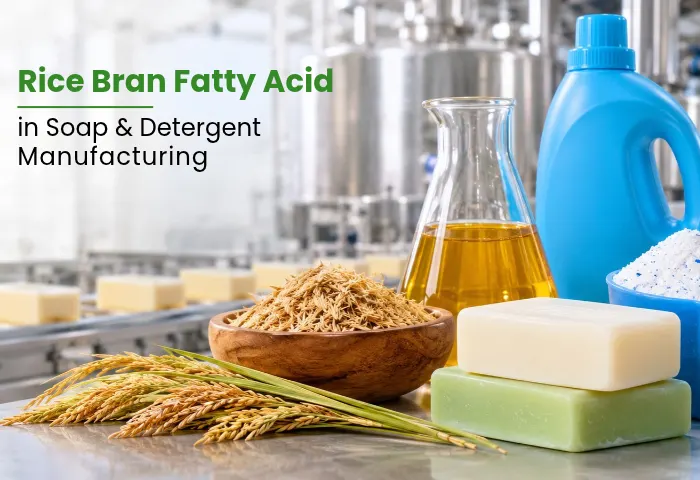
Introduction: Understanding Rice Bran Fatty Acids
Rice bran fatty acids are plant-based fatty acids obtained during the rice milling process. They contain fatty acids that can serve as important raw materials in various industrial applications, particularly soap and detergent manufacturing.
In the soap and detergent industry, manufacturers use different types of fatty acids to develop products with specific cleansing, foaming, and formulation characteristics. Understanding their properties, uses, and suitability can help manufacturers determine how they fit into their production processes.
Key Properties of Rice Bran Fatty Acids
Rice bran fatty acids are a blend of fatty acids derived from rice bran oil, with their composition depending on the processing method and product grade. Some of their key properties include:
- Plant-Based Composition: Derived from rice bran oil, making it a vegetable-based alternative to certain animal-derived fatty acid sources.
- Fatty Acid Content: It contains fatty acids such as oleic, linoleic, palmitic, and stearic acids. Their proportions can vary depending on their sources and processing conditions.
- Saponification Potential: Its fatty acids can react with alkalis such as sodium hydroxide or potassium hydroxide to form soaps, making them useful in soap production.
- Formulation Versatility: Depending on its composition and grade, it can be considered for different soap and detergent formulations.
- Industrial Raw Material: It can serve as an ingredient for manufacturers looking to incorporate rice bran-derived materials into their production processes.
How Is Rice Bran Fatty Acid Used in Soap Manufacturing?
The fatty acid components in rice bran fatty acids react with alkalis to produce soap. During saponification, fatty acids react with sodium hydroxide or potassium hydroxide to form soap salts, which are used in different types of cleansing products, depending on the manufacturing process and ingredient composition. Some common applications include:
- Toilet Soap Production: Rice bran fatty acid can be considered for toilet soap formulations where manufacturers use vegetable-based fatty acid sources.
- Laundry Soap Manufacturing: It can serve as a raw material in laundry soap production, contributing to the soap base used for cleaning fabrics.
- Liquid Soap Formulations: When neutralized with suitable alkalis, its fatty acid components can be used in certain liquid soap formulations.
- Industrial Soap Production: Manufacturers can evaluate it for large-scale soap production based on their formulation requirements and product specifications.
How Is Rice Bran Fatty Acid Used in Detergent Manufacturing?
Through chemical processing, rice bran fatty acid components can be converted into ingredients such as fatty acid salts and surfactants, depending on the intended application, particularly for the production of soap-based cleaning agents and other formulations that use fatty acid derivatives.
- Soap-Based Detergents: Rice bran fatty acid can be neutralized with suitable alkalis to produce fatty acid salts used in soap-based cleaning products.
- Surfactant Production: Its fatty acids can serve as feedstock for producing certain surfactant ingredients through further chemical processing. These ingredients help support the cleaning and emulsifying functions of detergent formulations.
- Laundry Cleaning Products: Processed rice bran fatty acid derivatives may be evaluated for use in laundry cleaning formulations, depending on their performance and compatibility with other ingredients.
- Industrial Cleaning Formulations: Suitable derivatives can also be considered for selected industrial cleaning applications that require fatty acid-based ingredients.
Benefits of Using Rice Bran Fatty Acid in Soap and Detergent Production
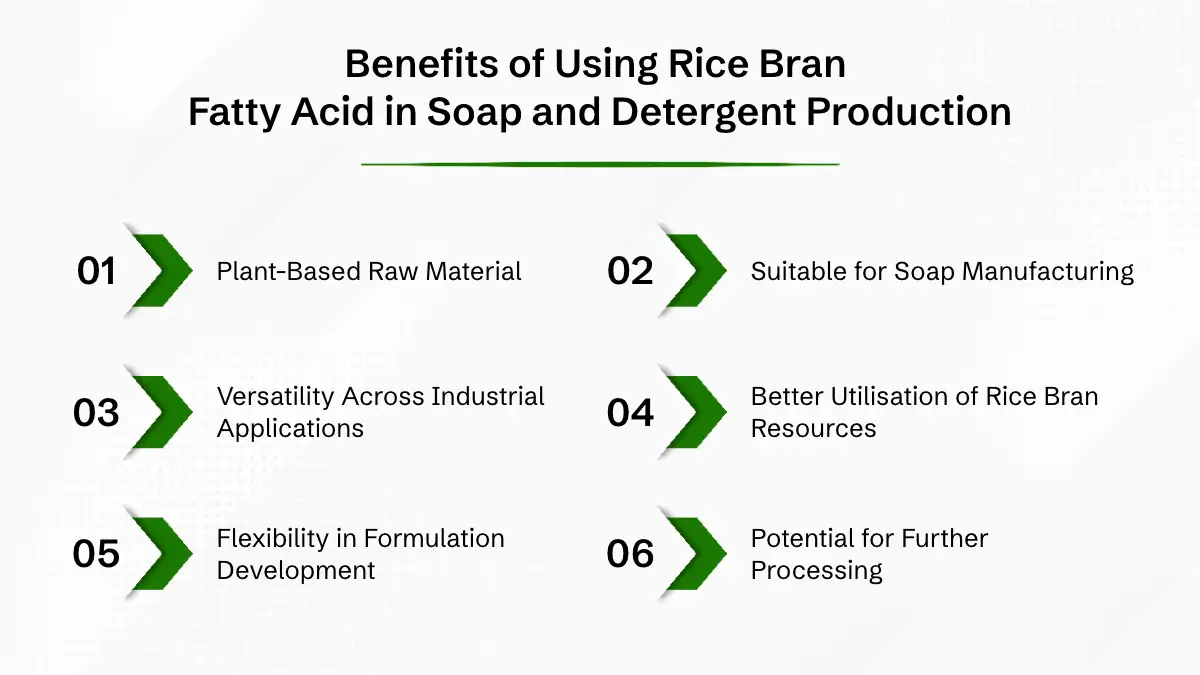
Here are some benefits of using rice bran fatty acids in soap and detergent production:
1. Plant-Based Raw Material
Obtained from rice bran oil, rice bran fatty acids are a vegetable-based alternative to certain animal-derived fatty acid sources. This allows manufacturers to use vegan options during manufacturing.
2. Suitable for Soap Manufacturing
Its fatty acid components react with alkalis to form soap salts through neutralization. This makes it a useful raw material for manufacturing different types of soaps, including toilet soaps and laundry soaps.
3. Versatility Across Industrial Applications
Rice bran fatty acid can be used in various applications, including soap production, soap-based detergents, and the manufacturing of selected fatty acid derivatives. Its suitability depends on the intended application and product specifications.
4. Better Utilization of Rice Bran Resources
Its use in industrial manufacturing helps create additional applications for rice bran-derived materials and supports better utilization of available resources.
5. Flexibility in Formulation Development
Manufacturers can evaluate different grades of rice bran fatty acid based on their fatty acid composition and technical specifications. This helps them determine its suitability for specific formulations and processing requirements.
6. Potential for Further Processing
Rice bran fatty acid can undergo additional chemical processing to produce fatty acid derivatives used in selected industrial applications. These derivatives may serve as ingredients in different cleaning and detergent formulations.
Conclusion: Rice Bran Fatty Acid in Soap & Detergent Manufacturing
Rice bran fatty acid is a plant-derived raw material with applications in soap manufacturing, soap-based detergents, and the production of selected fatty acid derivatives. Its fatty acid composition, saponification potential, and versatility make it a strong option for manufacturers developing different cleaning product formulations. Selecting the right grade and evaluating its technical specifications are essential for achieving the desired formulation characteristics.
SVR Gaia supplies rice bran-derived ingredients for various industrial applications. If you are looking for a reliable source of rice bran fatty acid for your manufacturing requirements, contact SVR Gaia to discuss product specifications and sourcing options.