
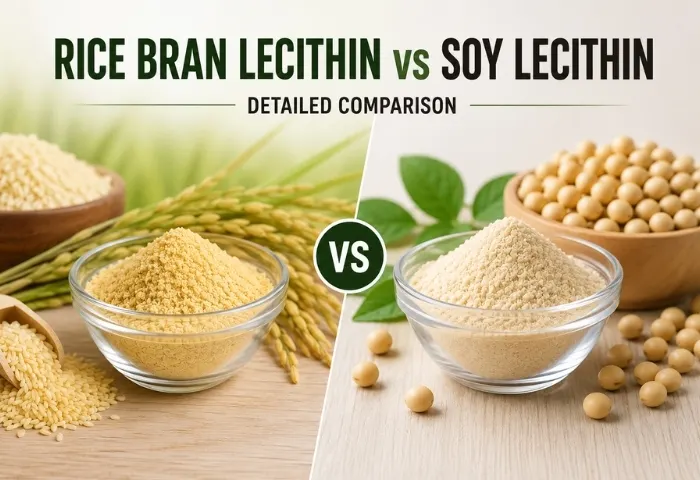
Introduction: Rice Bran Lecithin and Soy Lecithin
Lecithin is a natural emulsifier commonly used in food, pharmaceutical, cosmetic, and animal feed industries to improve texture, stability, and shelf life. While soy lecithin has been used in these industries for many years, people are now preferring rice bran lecithin. A plant-based option with less allergen risk, sustainable sourcing, and growing demand for clean-label ingredients.
Rice bran lecithin and soy lecithin have similar functions but differ in composition, applications, and consumer appeal. Understanding the difference is important because it helps you choose the right lecithin for your business.
In this blog, we will compare rice bran lecithin and soy lecithin and learn their uses, benefits, challenges, and key differences.
What is Lecithin?
Lecithin is a naturally occurring fatty acid composed of phospholipids, which is found in both plants and animals. It can bind oil and water and is widely used as a natural emulsifier in various industries to improve texture, stability, and shelf life.
Lecithin is commonly extracted from sources such as soybeans, rice bran, sunflower seeds, and egg yolks. It is commonly used in the food, pharmaceutical, cosmetic, and animal nutrition industries to prevent ingredient separation, enhance product consistency, and improve processing efficiency.
What is Rice Bran Lecithin?
Rice bran lecithin is a plant-based emulsifier obtained during the refining of rice bran oil, which is extracted from the outer layer of the rice grain. As a by-product of rice bran oil processing, it is considered a sustainable and eco-friendly alternative to conventional lecithins.
Rice bran lecithin is particularly valued for being soy-free, having a low allergen risk, and supporting the growing demand for plant-based and clean-label ingredients, making it popular nowadays.
What is Soy Lecithin?
Soy lecithin is a soy-based natural emulsifier extracted from soybean oil during the degumming process. It has properties similar to rice bran lecithin and has better availability and cost-effectiveness.
Soy lecithin is commonly found in products such as chocolates, baked goods, margarine, nutritional supplements, medicines, and personal care products. While it has many benefits, some consumers still prefer alternative options due to concerns about soy allergies and genetically modified (GMO) soybeans.
Rice Bran Lecithin vs Soy Lecithin: Detailed Comparison
| Feature | Rice Bran Lecithin | Soy Lecithin |
| Source | Rice Bran | Soybeans |
| GMO Status | Naturally non-GMO (depending on source) | May be GMO unless certified |
| Allergen Risk | Very low | Soy is a common allergen |
| Emulsifying Ability | Excellent | Excellent |
| Color | Brown | Yellow |
| Taste | Mild | Slight bean flavour |
| Sustainability | Uses rice by-product | Soy cultivation |
| Industrial Uses | Food, feed, cosmetics, pharma | Food, feed, pharma, cosmetics |
| Consumer Preference | Growing | Established |
Key Applications of Rice Bran Lecithin and Soy Lecithin
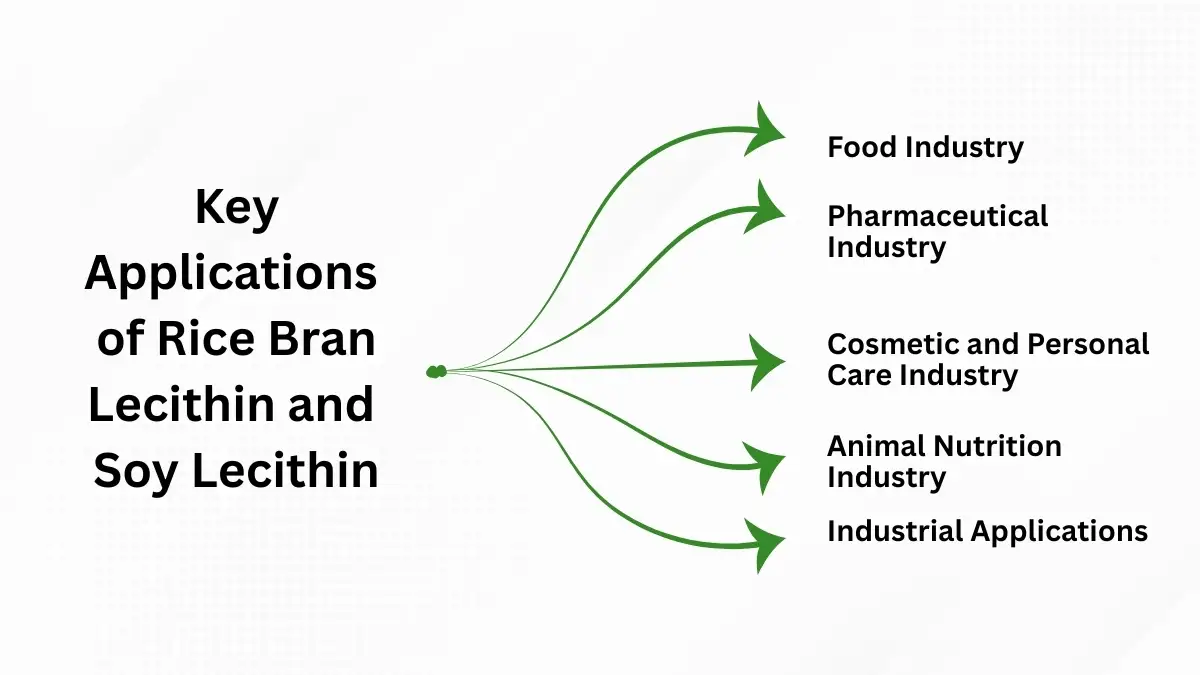
Here are some key applications of rice bran lecithin and soy lecithin:
-
Food Industry
- Chocolates, bakery products, confectionery, margarine, sauces, dairy products, and instant foods all require some type of lecithin to improve product texture, prevent ingredient separation, and extend shelf life.
-
Pharmaceutical Industry
- In pharmaceutical formulations, rice bran and soy lecithin are used in tablets, capsules, and liquid medicines to improve ingredient dispersion, stability, efficient delivery of active ingredients, and bioavailability.
-
Cosmetic and Personal Care Industry
- Creams, lotions, moisturizers, lip balms, and hair care products contain lecithin to help stabilise formulations, improve texture, retain moisture, and provide a smooth application experience.
-
Animal Nutrition Industry
- In agriculture industries, lecithin is added to animal feed formulations for livestock, poultry, and aquaculture. They improve feed consistency, supports fat digestion, and enhances the nutritional quality of feed products.
-
Industrial Applications
- Lecithin is also used in industries such as paints, coatings, inks, lubricants, and chemical formulations, as it helps with product stability, processing efficiency, and overall performance.
Benefits of Rice Bran Lecithin
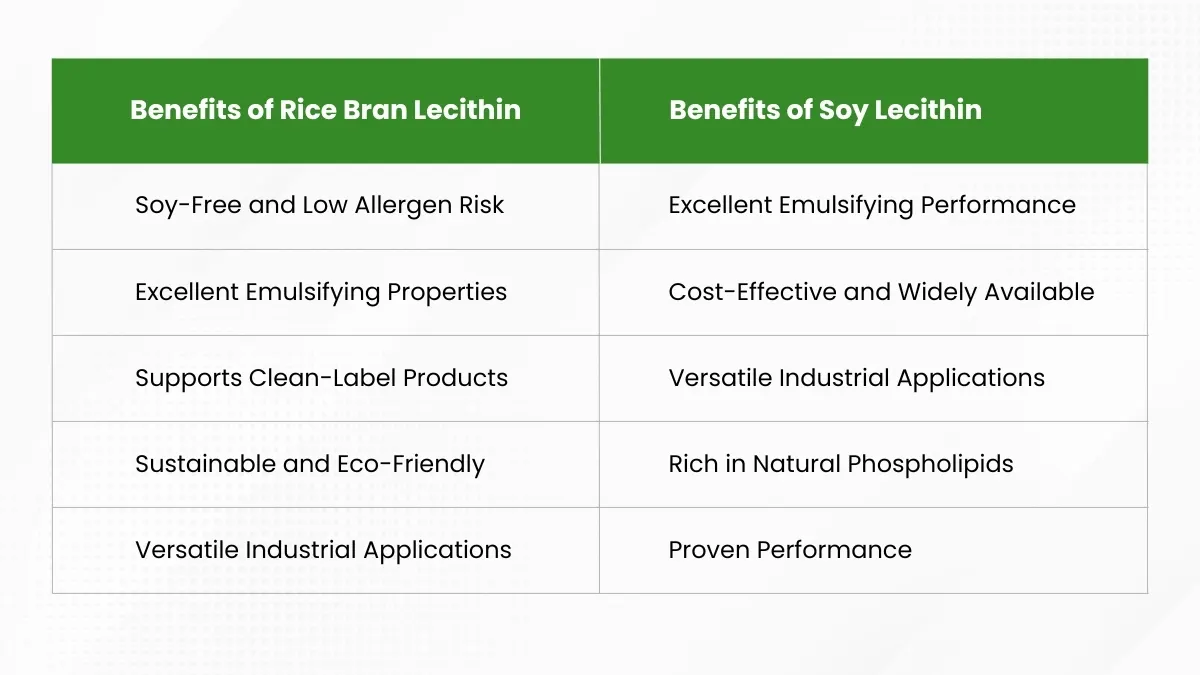
Rice bran lecithin has been gaining popularity, but why? Here are some benefits of rice bran lecithin that will help you understand:
-
Soy-Free and Low Allergen Risk
- Many people are allergic to soy products, making it riskier for them to use. On the other hand, rice bran lecithin is naturally soy-free, making it an excellent choice for people with soy allergies.
-
Excellent Emulsifying Properties
- Rice bran lecithin effectively blends oil and water, improving the texture, consistency, and stability of products. This makes it widely used in the food, pharmaceutical, cosmetic, and animal nutrition industries.
-
Supports Clean-Label Products
- As it is naturally made from rice bran, it aligns with consumers’ interest in plant-based products, minimal processing, and clean-label formulations, making it attractive to modern manufacturers.
-
Sustainable and Eco-Friendly
- Rice bran lecithin is a by-product of the milling process. This helps utilize every ingredient and reduce agricultural waste.
-
Versatile Industrial Applications
- Its functional properties make rice bran lecithin suitable for a wide range of applications, including food processing, animal feed, pharmaceuticals, cosmetics, and other industrial formulations, offering a reliable and versatile natural emulsifier.
Benefits of Soy Lecithin
Soy lecithin has been used for many years in various industries. Here are some benefits of using it:
-
Excellent Emulsifying Performance
- Soy lecithin effectively combines oil and water, improving the texture, consistency, and stability of products. This makes it a preferred ingredient in food processing, pharmaceuticals, cosmetics, and animal nutrition.
-
Cost-Effective and Widely Available
- Soy is used in many industries for different purposes, so its cultivation is done on a large scale, making it widely available, and as the huge supply meets demand, the prices stay reasonable.
-
Versatile Industrial Applications
- Soy lecithin is used in many industries, including food, pharmaceuticals, cosmetics, animal feed, and nutritional supplements, commonly for chocolates, baked goods, margarine, medicines, and personal care products.
-
Rich in Natural Phospholipids
- Soy lecithin contains phospholipids such as phosphatidylcholine, phosphatidylethanolamine, and phosphatidylinositol, which contribute to its excellent emulsifying properties and make it valuable in various industrial formulations.
-
Proven Performance
- Soy lecithin has been used for decades across multiple industries. Its consistent quality, ease of processing, and compatibility with different formulations continue to make it a preferred choice for many manufacturers.
Challenges of Rice Bran Lecithin
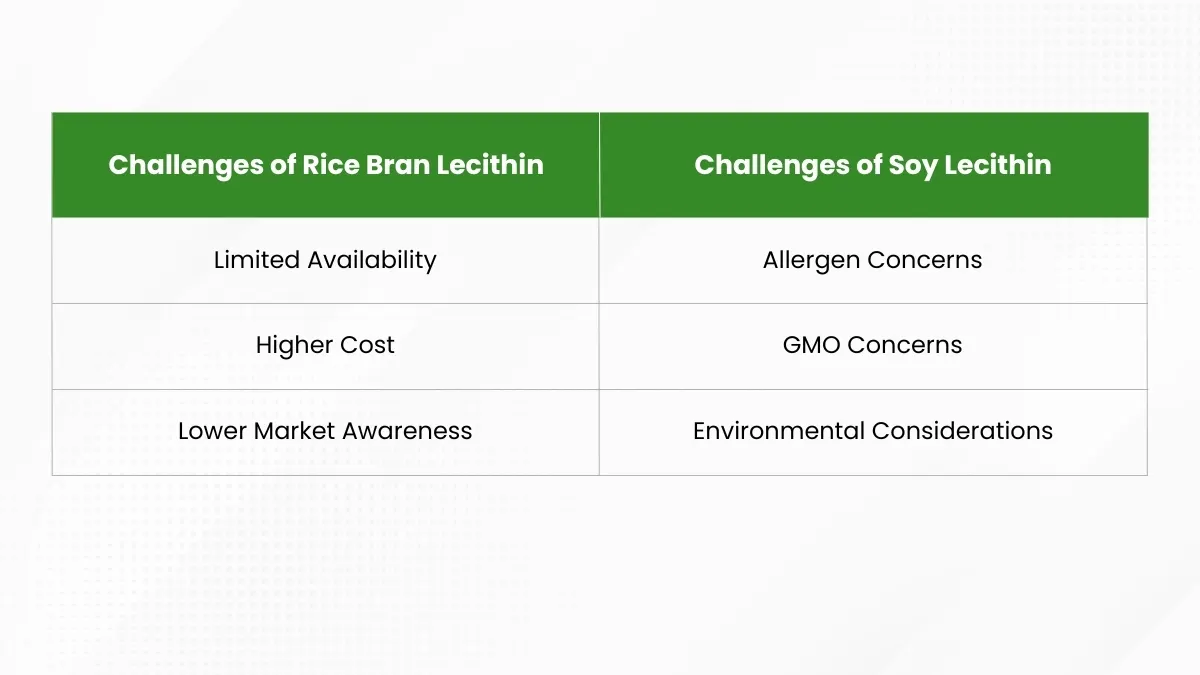
Despite having many advantages, when using rice bran lecithin, you have to deal with some challenges:
-
Limited Availability
- Unlike soy lecithin, rice bran lecithin is not in abundant supply. This can sometimes affect sourcing and might be a dealbreaker while bulk ordering.
-
Higher Cost
- As the supply doesn’t meet the demand, the cost of the product increases, making rice bran lecithin more expensive than soy lecithin.
-
Lower Market Awareness
- Compared with soy lecithin, the market awareness of rice bran lecithin is very low among many manufacturers and consumers. As a result, its adoption across industries is relatively limited despite its functional benefits.
Challenges of Soy Lecithin
Soy lecithin has been used for many years in multiple industries. However, there are some challenges industries are facing today.
-
Allergen Concerns
- Soy is one of the most allergic substances, and it’s not suitable for individuals with soy allergy or for products marketed as allergen-free. This is why manufacturers are exploring other options.
-
GMO Concerns
- Most of the soybean products are genetically modified (GMO). Unless the packaging says “organic,” it’s hard to trust whether the product is GMO or not, concerning consumers and manufacturers looking for GMO-free products.
-
Environmental Considerations
- Large-scale soybean cultivation has raised environmental concerns in some regions, including land-use changes and deforestation. As sustainability becomes a greater priority, some manufacturers are exploring alternative plant-based lecithins derived from agricultural by-products, such as rice bran.
Which Lecithin is Better: Rice Bran Lecithin vs Soy Lecithin?
We cannot precisely state which lecithin is the best, as both options have their benefits and challenges. The answer depends on your product requirements, target market, and intended application.
If you are looking for a cost-effective option that is widely available, then soy lecithin is more reliable due to its large-scale manufacturing, consistent supply, and affordability.
On the other hand, if you are looking for a soy-free, low-allergen, and plant-based emulsifier, rice bran lecithin is an excellent alternative. Rice bran lecithin supports the growing demand for clean-label and sustainable ingredients while offering similar functional performance in many applications.
Conclusion: Rice Bran Lecithin vs Soy Lecithin
Both Rice bran and soy lecithin are great natural emulsifiers that offer similar uses to multiple industries, including food, pharmaceutical, cosmetic, animal nutrition, and industrial sectors.
While soy lecithin is widely used and cost-effective, rice bran lecithin is plant-based and has low-allergen content. The right choice ultimately depends on your product requirements, target audience, and formulation goals. By understanding your ultimate goal, you will be able to choose the best.
But if wanna go with the trend and buy the plant-based option, then a reliable rice bran lecithin manufacturer like SVR Gaia is the right choice for you. SVR Gaia offers premium-quality rice bran lecithin produced through advanced processing and strict quality standards. Contact us today to learn how our rice bran-based solutions can support your food, feed, pharmaceutical, or industrial applications.
FAQs: Rice Bran Lecithin vs Soy Lecithin
1. Which form of lecithin is best?
Ans: While the answer depends on your needs, if you are looking for a plant-based healthy option, then rice bran lecithin is the best.
2. Which is healthier, rice bran oil or soybean oil?
Ans: Rice bran oil is healthier than soybean oil.
3. Who should not take soy lecithin?
Ans: People with a soy allergy or pregnant women shouldn’t take soy lecithin.
4. What is the best brand of lecithin?
Ans: SVR Gaia is the best brand because of its premium-quality ingredients.