
Introduction: Why Is Your Cooking Oil Foaming?
Wondering why the cooking oil foaming starts when you fry food? While some foaming is okay, excessive foaming indicates something is wrong with the oil or the frying process.
Many factors lead to foam in cooking oil, such as moisture in food, leftover food particles, repeated reuse of oil, or overheating. Sometimes foaming affects the quality, taste, or texture of the fried food and indicates that the oil is degrading.
Understanding why the oil is foaming helps consider the next steps. In this blog, we will discuss why cooking oil foaming happens while frying.
What Is Cooking Oil Foaming?
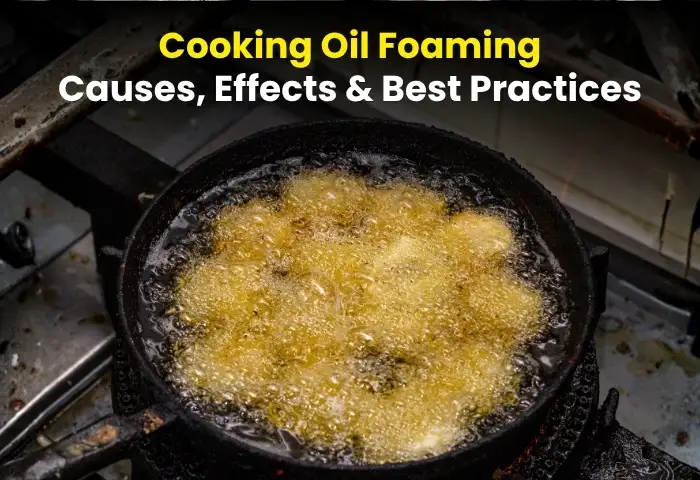
Cooking oil foaming means the formation of a layer of bubbles above the food while frying. While some bubbling is a normal reaction when moisture from food comes into contact with hot oil, excessive or persistent foam usually indicates that the oil’s condition has changed.
When heated repeatedly with leftover food residues, the oil starts to break down, making it more likely to produce foam during cooking. While occasional foaming is not a major concern, continuous foaming may indicate that the oil has deteriorated and may no longer be a good option for frying, leading to decreased food quality, cooking efficiency, and oil management.
Why Does Cooking Oil Foam While Frying?
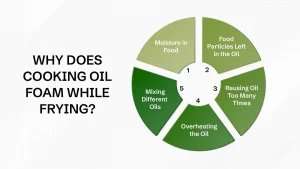
Here are some reasons why cooking oil foams while frying:
-
Moisture in Food
- Water inside the food, when it comes into contact with the frying pan, turns into steam, leading to the creation of bubbles and causing oil foaming, especially when the food item is not dry or has some sort of coating.
-
Food Particles Left in the Oil
- Food crumbs, batter, and starch left behind after frying can continue to cook and burn in the oil. These particles then accumulate and lead to oil foam formation, especially when the oil is reused multiple times.
-
Reusing Oil Too Many Times
- Reusing oil multiple times can cause it to break down. As the oil degrades, it produces compounds that make it more prone to foaming.
-
Overheating the Oil
- The smoke point of an oil is the highest temperature point going beyond which it can cause the oil to break down, making it more likely to produce foam, smoke, and unpleasant odours during cooking.
-
Mixing Different Oils
- Mixing multiple oils can affect their frying stability because each oil has a different heat tolerance, increasing foaming, especially if one of the oils has already been used or degraded.
Is Foaming Oil Bad?
No, foaming oil is not bad; it can just be a sign of moisture. However, excessive foaming can indicate issues of overheating, oil contamination, or the need for a change in oil.
Signs That Your Cooking Oil Should Be Replaced
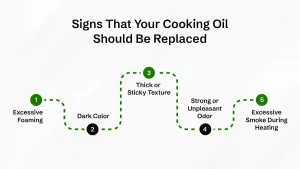
Here are some signs to know when to replace your cooking oil:
-
Excessive Foaming
- Cooking oil may produce some foam while frying, but excessive foaming can be a sign that the oil has degraded and should be discarded, as it can no longer be used.
-
Darker Color
- When cooking oil is used multiple times, its colour starts to change, making it dark. The dark colour indicates the accumulation of burnt food particles and oxidation by-products.
-
Thick or Sticky Texture
- As oil breaks down, it may become thicker and more viscous than usual. This change in texture can affect frying performance and cause food to absorb more oil.
-
Strong or Unpleasant Odour
- Repeatedly cooking with the same oil may make it smell rancid, burnt, or unpleasant. On the other hand, fresh oil has a mild neutral aroma, depending on the type of oil.
-
Excessive Smoke During Heating
- If the oil starts smoking at lower temperatures than normal, it may have lost its heat stability. This is a strong indication that the oil has degraded and should be discarded.
Best Practices to Prevent Cooking Oil Foaming
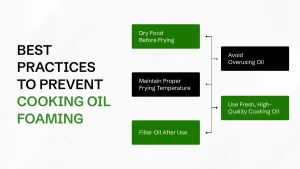
Here are the best practices to prevent cooking oil foaming:
-
Dry Food Before Frying
- Water in the food is a primary source of foaming. Always dry the food item with a paper towel before frying it to avoid foaming.
-
Maintain Proper Frying Temperature
- Avoid overheating the oil beyond its smoke point. Using the correct frying temperature helps preserve oil stability and prevents premature degradation.
-
Filter Oil After Use
- After using the oil, filter it before reusing it to remove any food particles, crumbs, and batter residue. This makes the oil clean, reducing the chances of foaming.
-
Avoid Overusing Oil
- Repeated heating breaks down the oil and increases the formation of compounds that cause foaming. For best results, limit how many times cooking oil is reused.
-
Use Fresh, High-Quality Cooking Oil
- Oils with a high smoke point and good oxidative stability, such as rice bran oil, are less likely to foam during frying, improving the frying performance, food quality, and overall cooking safety.
People Also Read: Checklist for a Good Cooking Oil
Which Oils Are More Stable for Frying?
Here is a table describing which oils are more suitable for frying, as per smoke point and Oxidative stability:
| Oil Type | Smoke Point | Frying Stability |
| Rice bran oil | ~250°C | Excellent |
| Mustard Oil | ~250°C | Good |
| Groundnut Oil | ~230°C | Good |
| Sunflower Oil | ~225°C | Good |
| Olive Oil | ~190°C | Moderate |
Conclusion: Cooking Oil Foaming
Cooking oil foaming while frying is normal until the oil starts foaming excessively. Usually, foaming is caused by factors such as moisture in food, leftover food particles in the oil, repeatedly using the same oil, or overheating beyond the oil’s ideal temperature.
By following proper frying practices, such as drying food items before frying, maintaining the correct temperature, filtering oil after use, and avoiding excessive reuse, you can significantly reduce foaming and improve cooking results.
Understanding the causes of oil foaming and recognising the signs of oil degradation can help you prepare safer, tastier food while extending the life of your cooking oil. For everyday Indian cooking, selecting an oil with a stable and reliable smoke point can make all the difference in achieving better frying results. Explore SVR Gaia’s rice bran oil and experience the difference that quality makes in every meal.
FAQs: Cooking Oil Foaming
1. Is it bad if my oil is foaming?
Ans: No, moderate oil foaming is not bad. However, excessive foaming indicates there is an issue with the quality of the oil.
2. How to stop cooking oil from foaming?
Ans: Here are some ways to stop cooking oil foaming:
- Dry food items before frying
- Maintain proper frying temperature
- Filter oil after use
- Avoid overusing oil
- Use fresh, high-quality cooking oil
3. Is it okay to fry food items in oil that has foam?
Ans: Yes, it is okay to fry food items in oil that has foam. However, oil should be changed if the foaming is excessive.
4. Why is my oil foamy when I deep fry?
Ans: Reasons why oil is foamy when deep frying are:
- Moisture in food
- Food particles left in the oil
- Reusing oil too many times
- Overheating the oil
- Mixing different oils
Moderate foam formation is fine; however, excessive foam indicates that the oil needs to be changed before cooking.