
Introduction: Rice Bran Oil Vs Mustard Oil
In the kitchen, we use various ingredients for daily use, such as spices and oils. These ingredients play a significant role in shaping our lifestyle, and selecting the right oil helps in creating a healthier one.
In India, where most households use mustard oil for its taste, many have started to count their calories and give their health a chance by choosing rice bran oil as their preferred household oil.
In this blog, we will discuss which oil is best for you, rice bran oil or mustard oil, by comparing their taste, nutritional value, and health benefits.
What is Rice Bran Oil?
Rice bran oil is a health-beneficial oil that is extracted from the bran of rice grain. Rice bran oil is known for its light texture, mild flavor, and high smoke point, which is best for Indian-style cooking.
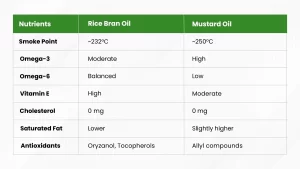
It is famous for its health benefits. It is rich in oryzanol, vitamin E, and omega-3 & 6 fatty acids, and is commonly used for frying, sautéing, and baking.
What is Mustard Oil?
Mustard oil is an oil extracted from mustard seeds. It has a strong aroma and pungent flavor, and it is commonly popular in North and East India.
Mustard oil contains monounsaturated fats, omega-3 fatty acids, and allyl isothiocyanate, which is responsible for its sharp taste, usually preferred in India. It is also famous for its high smoke point, helping in deep-frying.
Nutritional Value of Rice Bran Oil and Mustard Oil
Health Benefits of Rice Bran Oil and Mustard Oil
Health Benefits of Rice Bran Oil
- Reduces Bad Cholesterol: Rice bran oil helps in reducing bad cholesterol and increasing good cholesterol in our body with the help of gamma-oryzanol available in the oil.
- Rich in Antioxidants: It contains antioxidants like vitamin E and gamma-oryzanol, helping fight oxidative stress and reduce inflammation. This supports heart health and may also have anti-aging effects on the skin.
- Metabolism Support: Packed with antioxidants like oryzanol and tocopherols, rice bran oil helps combat free radicals in the body, also improving your immune response, which is your body’s first line of defense against bacteria, viruses, and other disease-causing organisms.
- Light and Non-Sticky: It has a low viscosity and a unique composition of fatty acids and bioactive compounds. This composition affects how the oil interacts with food and skin, resulting in a lighter and non-sticky feel.
- Supports Skin Health: Applying rice bran oil to your skin moisturizes and softens the skin due to its high fatty acid content and provides hydration. The presence of tocopherols and oryzanol protects the skin from pollution and UV rays, and harsh weather, which helps neutralize free radicals and prevents premature aging.
Health Benefits of Mustard Oil
- Boosts Heart Health: Mustard oil helps in reducing the bad cholesterol and increasing the good cholesterol, as it contains monounsaturated fatty acids, helping heart health.
- Supports Immunity: The natural antioxidants and antibacterial compounds in mustard oil help protect against infections and support the immune system.
- Promotes Digestion: It helps in stimulating the secretion of digestive juices and enhancing appetite.
- Soothes Inflammation: Mustard oil has an anti-inflammatory nature, making it great for massages and joint pain relief, which is commonly found in most women and men in India above the age of 40.
- Adds Authentic Indian Flavor: It has a bold, authentic Indian flavor, making it perfect for famous dishes in India like sarson da saag, achars, or fish curry.
Cooking Uses & Taste
Rice Bran Oil
Rice bran oil has a mild, neutral taste that doesn’t overpower the natural flavors of food. It has a high smoke point of around 232°C, making it perfect for all types of Indian cooking, from frying and sautéing to baking and grilling.
It absorbs less oil, turning your snacks into light, crisp, and non-greasy treats, ideal for dishes like cutlets, pakoras, or stir-fries.
Mustard Oil
Mustard oil, on the other hand, has a bold, pungent flavor that instantly elevates traditional dishes. When heated to the right temperature, it gives food a rich, earthy aroma that’s hard to replicate.
It’s a favorite in North and East Indian cuisines, especially for recipes that need that signature sarson taste.
Which Oil Suits You Better?
Depending on health goals and taste preferences, different people have different preferences. If you are looking for health and skin benefits, then rice bran oil suits you better. But if you are looking for traditional taste and crispness in your food, then mustard oil suits you better.
Some people who want to enjoy while being a little concerned about their health use both rice bran oil and mustard oil in their food, as per the occasion and at times.
People Also Read: Rice Bran Oil VS Groundnut Oil: Pros, Cons, and Insights
Why Choose Natural 9 Rice Bran Oil?
Choosing the right cooking oil can make a big difference to your health and the taste of your meals. At Natural 9, we sell 100% naturally extracted rice bran oil, preserving essential nutrients, like vitamin E, MUFA, and PUFAs.
Whether you’re cooking festive delicacies, daily meals, or trying to maintain a healthier lifestyle, Natural 9 Rice Bran Oil provides the perfect combination of health, flavor, and reliability.
Conclusion
Choosing the right cooking oil can have a significant impact on both your health and the taste of your meals. While mustard oil offers bold flavors and authentic Indian aroma, rice bran oil stands out for its heart-friendly properties, balanced fatty acids, and antioxidant-rich composition.
Whether you want to enjoy traditional dishes or maintain a healthier lifestyle, Natural 9 Rice Bran Oil provides a perfect balance of nutrition, taste, and versatility. By incorporating it into your daily cooking, you can relish flavorful meals while supporting your heart, skin, and overall wellness.
In the end, the best choice depends on your taste preferences and health goals, and sometimes, a thoughtful combination of both oils can give you the best of flavor and nutrition.
FAQs
1. Which oil is better than mustard oil?
Ans- Rice bran oil is considered better than mustard oil if we compare them by health benefits.
2. Is mustard oil safe during pregnancy?
Ans- Mustard oil is not considered safe during pregnancy due to its harmful chemical compounds, especially erucic acid, which can be toxic to the heart, and the risk of miscarriage from consumption.
3. Does rice bran oil contain omega-6?
Ans- Yes, rice bran oil does contain omega-6; it also contains omega-3, vitamin E, A, and D, and MUFA and PUFA, all adding to its nutritional value.