
Introduction: Why Proper Disposal of Used Cooking Oil Matters
In our daily life, we require three main macronutrients that provide us with energy. These macronutrients contain the components of food that our body needs to maintain its systems and structures. These three macronutrients are carbohydrates, protein, and fats.
Carbohydrates are the macronutrient that gives us energy to work all day, protein helps our muscles recover and grow, and fats help us store energy and insulate the body to maintain temperature. They also provide vitamin A, D, E, and K.
After cooking, we are often left with leftover cooking oil, especially if the dish required deep frying, then we have a good quantity of leftover oil. It can be confusing to decide what you’re supposed to do with these types of food waste, which is why, in this blog, we will talk about why proper disposal of used cooking oil matters.
What Happens When Cooking Oil Is Reused Too Many Times?
You have leftover cooking oil from the last time you cooked, so it can be reused again, right? But have you ever wondered what happens when you reuse cooking oil too many times? For starters, reheating oil can significantly reduce its quality and safety. Many chemical changes happen with repeatedly heated oil. This process leads to the formation of harmful compounds such as free radicals and trans fats, which may negatively affect health when consumed regularly.
Reheating any food product reduces its nutritional value, and over time, the oil becomes darker in color, thicker in texture, and may develop a strong or unpleasant smell. These changes indicate that the oil’s quality is reducing and is no longer suitable for cooking.
Safe Ways to Reuse and Recycle Cooking Oil at Home
Here are some ways to safely use reused oil at home:
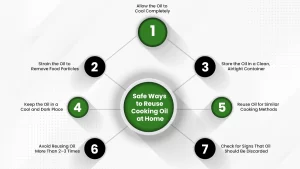
1. Allow the Oil to Cool Completely
Cooling the reused oil before use allows food particles to settle at the bottom, making it easier to filter the oil later. Also, hot oil can be dangerous and may cause burns.
2. Strain the Oil to Remove Food Particles
Before storing or reusing the oil, strain it using a fine mesh strainer or muslin cloth. This removes leftover crumbs or food particles that can burn even more during the next use, add foul smell, and speed up oil degradation.
3. Store the Oil in a Clean, Airtight Container
After filtration, put the oil in a clean and dry glass or stainless steel container. Keep the container sealed tightly to prevent exposure to air, moisture, and contaminants.
4. Keep the Oil in a Cool and Dark Place
Storing the oil container in a cool and dark place helps the oil to slowly break down, helping to increase the shelf life of the oil.
5. Reuse Oil for Similar Cooking Methods
Try to reuse oil for the same type of cooking. For example, oil used for frying snacks can be reused for similar frying tasks. Mixing flavors from different foods may affect taste and quality.
6. Avoid Reusing Oil More Than 2–3 Times
Even after doing all the above steps, the oil should not be used more than 2-3 times, as it decreases the quality and taste of the oil. Also, heating the same cooking oil too many times can lead to an increase in harmful substances.
7. Check for Signs That Oil Should Be Discarded
Do not reuse oil if it becomes dark, thick, foamy, or produces a strong smell. Excessive smoke during heating is also a sign that the oil has been degraded and should be disposed of properly.
People Also Read: Top 7 Health Benefits of Rice Bran Oil
How to Dispose of Used Cooking Oil Safely
As noted above, to dispose of used cooking oil safely, the oil should be allowed to cool thoroughly before being strained or sieved into a suitable container. This should be used only 2-3 times before being taken to an appropriate recycling center for processing at a larger scale.
Most importantly, never pour used cooking oil down the sink, toilet, or outdoor drains. Oil can harden and stick to pipes, leading to blockages and costly plumbing repairs. By disposing of used cooking oil responsibly, households can help reduce pollution, keep drainage systems clear, and maintain a cleaner environment.
Common Mistakes to Avoid When Disposing of Cooking Oil
People can make mistakes; that’s a very common trait in humans, but while disposing of cooking oil, we should avoid these common mistakes to protect the environment and our health:
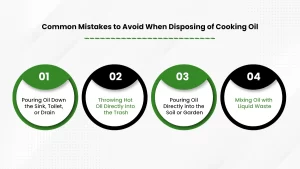
1. Pouring Oil Down the Sink, Toilet, or Drain
Pouring oil directly down the sink, toilet, or drain can solidify inside pipes, causing serious blockages and expensive plumbing repairs.
2. Throwing Hot Oil Directly into the Trash
When you throw hot oil directly into the trash, it can melt the plastic trash bin and the trash inside it, which is why you should dispose of the oil only after making sure it has cooled down.
3. Pouring Oil Directly into the Soil or Garden
Cooking oil can damage soil quality and harm plants by blocking air and water flow in and within the soil.
4. Mixing Oil with Liquid Waste
When oil is mixed with other liquid waste, it becomes harder to manage and may leak or spread contamination.
Choosing High-Quality Cooking Oil for Better Reusability
The quality of cooking oil plays an important role in how safely it can be reused. Oils with a high smoke point and balanced fatty acid composition are generally better suited for frying and reheating compared to low-quality or highly processed oils that degrade quickly.
Choosing oil that contains natural antioxidants and stable fats helps maintain oil quality even after limited reuse. These properties help slow oxidation, reduce smoke formation, and keep the oil safer for cooking.
Rice bran oil is often considered a good option for such purposes because of its high smoke point, antioxidant content like Gamma Oryzanol, and balanced MUFA & PUFA profile. When sourced from trusted manufacturers like SVR Gaia that follow strict quality standards, it can offer better performance in the kitchen while supporting healthier cooking habits.
People Also Read: What is the Process of Rice Bran Oil from Rice Grain to Your Homes?
Conclusion: How to Reuse, Recycle, or Dispose of Used Oil?
Used cooking oil is a common byproduct in every kitchen, but handling it responsibly is important for both health and the environment. Reusing oil too many times can lead to the formation of harmful compounds, while improper disposal can cause plumbing blockages and environmental pollution.
By following simple steps such as filtering oil, limiting reuse to 2–3 times, storing it correctly, and avoiding pouring it down drains, you can reduce waste and protect your home’s plumbing system.At the same time, choosing a high-quality cooking oil plays a key role in safe and efficient cooking. Oils with a high smoke point and natural antioxidants perform better during cooking and limited reuse. Contact Trusted brands like SVR Gaia to ensure quality, purity, and stability, helping households cook healthier meals while managing cooking oil more responsibly.
People Also Ask
1. How to dispose of used oil at home?
Ans: To dispose of used oil at home, the oil should be allowed to cool thoroughly before being strained or sieved into a suitable container. This should be used only 2-3 times before being taken to an appropriate recycling center for processing at a larger scale.
2. How to throw away expired oil?
Ans: To throw away expired oil:
- Allow the oil to cool completely
- Strain the oil to remove food particles
- Store the oil in a clean, airtight container
- Keep the oil in a cool and dark place
- Reuse oil for similar cooking methods
- Avoid reusing oil more than 2–3 times
- Check for signs that oil needs to be discarded
3. Can I pour used cooking oil down the drain?
Ans: No, you cannot pour used cooking oil down the drain, as it can solidify inside pipes, causing serious blockages and expensive plumbing repairs.