
Introduction: Why Choosing the Right Cooking Oil Matters
All cooking oils are made with fats, and deciding whether a cooking oil is a good one depends on which types of fats are present: are they good fats? Or bad fats?
Bad fats are usually saturated and trans fats found in oils, which are bad for your health. On the other hand, good fats are monounsaturated and polyunsaturated, which are good for your health.
With so many options available, understanding what makes a cooking oil “good” can help you make healthier and smarter choices. In this blog, we’ll explore the key characteristics of a good cooking oil and how to choose one for everyday use.
What Makes a Good Cooking Oil?
A good cooking oil is judged by many factors, such as its smoke point, oxidative stability, fatty acid composition, antioxidant content, and suitability for different cooking methods. These characteristics not only influence the taste and texture but also determine whether the oil is safe for your health.
It’s important to understand what makes a cooking oil truly suitable for everyday use. By evaluating the key qualities given above, you can choose an oil that delivers better cooking performance while supporting long-term health.
Checklist for Choosing a Good Cooking Oil
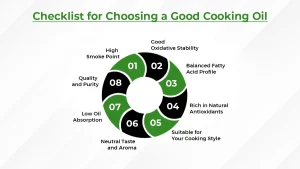
Here is a checklist that will help you choose an oil that is good for you:
-
High Smoke Point
- A smoke point is the temperature at which cooking oil starts to break down and burn.
- A high smoke point is very important for Indian cooking methods such as deep frying, tadka, and stir-frying, where oils are exposed to intense heat.
-
Good Oxidative Stability
- Oxidative stability is the ability of an oil to resist breaking down when exposed to heat, air, and light.
- Good oxidative stability helps the oil remain fresh for longer, produce fewer harmful compounds during cooking, and be more suitable for limited reuse.
-
Balanced Fatty Acid Profile
- The presence of both monounsaturated fats (MUFA) and polyunsaturated fats (PUFA) is important in an oil, while keeping saturated fats in moderation.
- An oil with a balanced fatty acid profile supports heart health and makes the oil suitable for regular consumption.
-
Rich in Natural Antioxidants
- Cooking oils naturally containing antioxidants such as Vitamin E and Gamma Oryzanol offer additional health benefits.
- These compounds protect the oil from oxidation and support overall well-being by reducing oxidative stress in the body.
- Suitable for Your Cooking Style
- Different cooking methods require different oils. The more heat is produced, the more an oil requires high oil stability.
- For everyday cooking, choose an oil with a high smoke point and a neutral taste to perform multiple cooking methods while maintaining its nutritional quality.
-
Neutral Taste and Aroma
- A good cooking oil helps your cooking taste better rather than overpowering it, which is why it is important to use an oil that has a neutral taste and aroma.
-
Low Oil Absorption
- An oil with high oil absorption can make the food taste greasy and ruin its texture.
- But a low-absorption oil helps the food item stay light, crispy, and less greasy after the cooking process.
-
Quality and Purity
- Always choose cooking oil from a trusted manufacturer that follows strict quality control and refining standards.
- High-quality oils are free from impurities, retain essential nutrients, and deliver consistent performance in everyday cooking.
Common Mistakes People Make While Choosing Cooking Oil
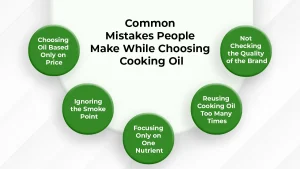
Here are some common mistakes that people make while choosing cooking oil:
-
Choosing Oil Based Only on Price
- A low-priced oil may seem right at the start, as it is more economical, but if it does not have all the qualities mentioned above, it can ruin food, taste, and texture, and can cause many health-related risks like heart disease.
-
Ignoring the Smoke Point
- Using an oil with a low smoke point for high-heat cooking can cause it to break down quickly, affecting food taste and reducing stability. Always match the oil to your preferred cooking method.
-
Focusing Only on One Nutrient
- A good cooking oil does not contain only one ingredient that helps your body. It should consist of other essential nutrients like healthy fats, antioxidants, and heat stability, rather than excelling in just one area.
-
Reusing Cooking Oil Too Many Times
- Repeatedly heating the same oil accelerates oxidation and degradation, reducing its quality and frying performance. Reuse oil only a limited number of times and discard it when it shows signs of deterioration.
-
Not Checking the Quality of the Brand
- Buying oil from any random brand without checking the quality of the refining and manufacturing process does not ensure the purity and stability. Choosing a trusted brand that follows strict quality standards helps ensure consistent performance and better nutritional value.
Why Rice Bran Oil Meets Most of These Criteria
Rice bran oil checks all the points in the checklist above that define a good cooking oil, making it suitable for daily Indian cooking.
| Checklist | Rice Bran Oil |
| High Smoke Point | It has a high smoke point of 250°C |
| Good Oxidative Stability | Its high smoke point helps it stay stable during high-heat cooking |
| Balanced Fatty Acid Profile | It has a balanced fatty acid profile of MUFA & PUFA with moderate saturated fats. |
| Rich in Natural Antioxidants | Rice bran oil is naturally rich in Gamma Oryzanol, Vitamin E, and plant sterols. |
| Suitable for Your Cooking Style | Its high smoke point makes it suitable for Indian cooking styles like Tadka and deep-frying. |
| Neutral Taste and Aroma | It has a light texture and neutral flavour. |
| Low Oil Absorption | Rice bran oil is also known for low oil absorption. |
| Quality and Purity | When sourced from a trusted manufacturer like SVR Gaia, it is an excellent choice. |
Conclusion: Choosing a Good Cooking Oil
Choosing an oil depends on your goal. Whether you want an oil for daily cooking, weight loss, or heart health, the oil of your choice should pass the criteria above to be in your shopping cart.
By understanding these factors and avoiding common mistakes such as ignoring the smoke point or repeatedly reusing oil, you can make more informed decisions for your family’s meals. Rice bran oil stands out by meeting all of these essential criteria, making it a practical choice for Indian kitchens.
If you’re looking for a cooking oil that combines heat stability, balanced nutrition, and reliable everyday performance, SVR Gaia Rice Bran Oil is an excellent choice. Explore SVR Gaia’s range of rice bran-based products and discover the difference that quality cooking oil can make in every meal.
FAQs: Choosing a Good Cooking Oil
1. What are the qualities of a good cooking oil?
Ans: The qualities of a good cooking oil are:
- High Smoke Point
- Good Oxidative Stability
- Balanced Fatty Acid Profile
- Rich in Natural Antioxidants
- Suitable for Your Cooking Style
- Neutral Taste and Aroma
- Low Oil Absorption
- Quality and Purity
2. Which oil is best for Indian cooking?
Ans: Rice bran oil is the best oil for Indian cooking due to its high smoke point and many health benefits.
3. Which oil is best for deep frying?
Ans: Rice bran oil is the best for deep frying due to its high smoke point of 250°C.