
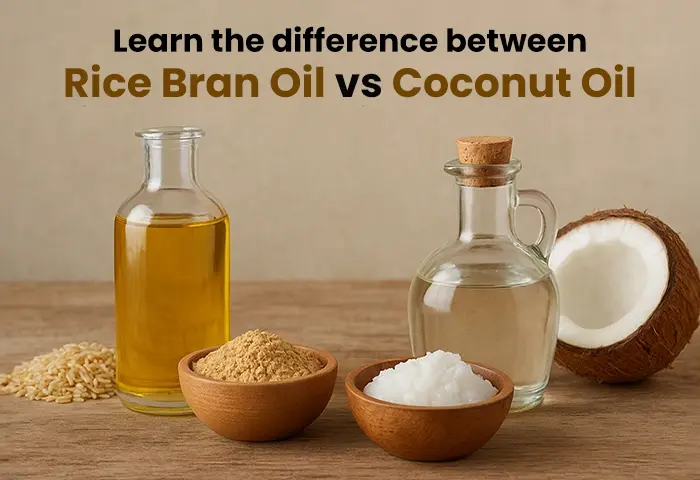
Introduction to Rice Bran Oil vs Coconut Oil
Rice bran oil is known for its heart-healthy nutrients, light texture, and suitability for Indian cooking. On the other hand, coconut oil is famous for its rich aroma, fatty acids, and traditional use in South Indian kitchens and hair care routines.
In this blog, we will compare rice bran oil vs. coconut oil in terms of nutrition, cooking uses, health benefits, skin & hair benefits, pros and cons, and overall wellness. By the end, you’ll know exactly which oil suits your kitchen and your body better.
What is rice bran oil?
Rice bran oil is extracted from the outer layer of the rice grain. It is mostly famous for its nutritional benefits, as it is a good source of gamma-oryzanol, vitamins E, A, and D, MUFA, and PUFA.
In Indian kitchens, rice bran oil is highly valued for its mild flavor, nutritional benefits, and high smoke point. It is also famous in the Asian market for its skin and hair benefits.
What is Coconut Oil?
Coconut oil is made from the white, edible kernel. This oil is processed in two ways: virgin and refined. Coconut oil adds a coconutty sweetness to dishes with its distinctive flavor.
Virgin coconut oil is made from fresh coconut meat, often using methods like wet-milling or cold-pressing, while refined coconut oil is produced from dried coconut kernels called copra and undergoes more processing, including heating, bleaching, and deodorizing.
Coconut oil has been used in Indian kitchens for many years due to its traditional uses in cooking and hair care.
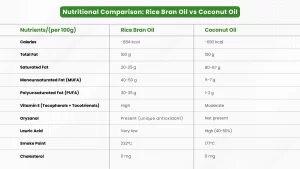
Nutritional Comparison: Rice Bran Oil vs Coconut Oil
Health Benefits of Rice Bran Oil vs Coconut Oil
Rice bran oil and coconut oil both have their individual health benefits, which make them ideal for Indian kitchens:
Health Benefits of Rice Bran Oil
- Heart Benefits: Rice bran oil has a good mix of saturated, monounsaturated, and polyunsaturated fats, providing cardiovascular benefits. It’s heart-healthy because it’s low in trans fats and cholesterol. It also lowers LDL cholesterol and increases HDL cholesterol, helping regulate blood pressure. Additionally, it improves blood pressure levels, making it a perfect choice for maintaining your physical health
- Skin & Hair Benefits: Rice bran oil maintains your skin health, as it is rich in antioxidants like oryzanol and tocopherols, and is a good addition to your skincare routine. It is beneficial for your anti-aging issues, moisturizes the skin, and protects the skin from environmental damage.
- Rice bran oil is a good source of vitamin E, helping to boost scalp circulation and health. Regular use helps reduce hair fall and promotes thicker, fuller growth.
- Immunity Support: Rice bran oil is packed with antioxidants like oryzanol and tocopherols, which help combat free radicals in the body. These antioxidants boost immunity by protecting cells from damage, helping fight infections more effectively.
Health Benefits of Coconut Oil
- Improves Heart Health: Some studies suggest coconut oil may increase HDL cholesterol, improving overall cholesterol balance when consumed moderately.
- Beneficial for Skin Health & Hair: Coconut oil acts as a natural moisturizer, helping to soothe dry skin, reduce inflammation, and support a smooth skin barrier.
- Provides Quick Energy: MCTs in coconut oil convert quickly into energy rather than being stored as fat, making it useful for people with active lifestyles.
Cooking Uses & Taste: Rice Bran Oil vs Coconut Oil
Here are some details on how rice bran oil and coconut oil work in the kitchen:
How Rice Bran Oil Performs in Cooking
- Neutral Taste: Rice bran oil has a light taste that doesn’t overpower food, making it suitable for everyday Indian dishes and baking.
- High Smoke Point: It has a high smoke point of 232°C, making it ideal for frying, deep-frying, roasting, and stir-frying without breaking down.
- Less Absorption: Rice bran oil absorbs less oil and blends smoothly with spices and marinades, making meals lighter, healthier, and more flavorful.
How Coconut Oil Performs in Cooking
- Distinct Coconut Flavor: It has a distinct coconut flavor that adds a rich, aromatic taste to dishes, making it popular in South Indian and coastal cooking.
- Moderate smoke point: It has a moderate smoke point of 177°C, which works well for sautéing, light frying, baking, and tempering but is not ideal for deep-frying.
- Solid at Room Temperature: It’s great for baking, desserts, and creamy textures, but less convenient for quick, everyday cooking.
Which Oil Should You Choose?
Choosing between rice bran oil and coconut oil depends on your health goals, cooking needs, and personal taste.
If you want an everyday, heart-healthy cooking oil, rice bran oil is the better choice because of its high smoke point, light texture, and cholesterol-friendly nutrients like oryzanol. It suits almost all Indian cooking styles, from deep frying to stir-frying to everyday tadkas.
On the other hand, coconut oil is a great option if you prefer its rich aroma, follow a traditional or coastal diet, or want an oil that supports hair and skin care. However, due to its higher saturated fat content, it’s best used in moderation for daily meals.
People Also Read: Which Is Better, Rice Bran Oil vs. Cottonseed Oil?
Conclusion: Which is a healthier option?
Choosing the right cooking oil is essential for both your health and your daily cooking experience. Rice bran oil and coconut oil each offer unique benefits, while rice bran oil stands out as a heart-healthy, versatile, and nutritionally balanced option, coconut oil remains a favorite for its aromatic flavor, traditional value, and powerful skin and hair benefits.
If you’re looking for an everyday oil that supports overall wellness, keeps your meals light, and works for almost every Indian cooking style, rice bran oil is the more practical and healthier choice. Coconut oil, meanwhile, is excellent when used in moderation for specific recipes, beauty needs, and traditional diets.
If you want a reliable, high-quality option, SVR Gaia’s 9 Natural Rice Bran Oil is a great choice for daily cooking. Feel free to contact us for any queries!
FAQs: Rice Bran Oil vs Coconut Oil
1. Is Rice Bran Oil healthier than coconut oil?
Ans- Yes, Rice Bran Oil is healthier than coconut oil due to its high nutritional value in gamma oryzanol, vitamins E, A, and D, MUFA, and PUFA.
2. Which oil is healthiest for Indian cooking?
Ans- Healthy oils for Indian cooking include rice bran oil, mustard oil, groundnut oil, coconut oil, sesame oil, and ghee, which are suitable for high-heat cooking and have beneficial nutritional profiles.
3. Which oil is better, sunflower or rice bran?
Ans- Rice bran oil is often favored for its high content of oryzanol, which may help lower cholesterol, making it a strong choice for heart health.
4. Is Rice Bran Oil ok for high cholesterol?
Ans- Yes, Rice Bran Oil is OK for high cholesterol, as it helps in lowering bad LDL cholesterol and increasing good HDL cholesterol.
5. Can a heart patient eat rice bran oil?
Ans- Yes, a heart patient can eat rice bran oil, as it is good for heart health due to its balanced fatty acid profile and cholesterol-lowering properties.