
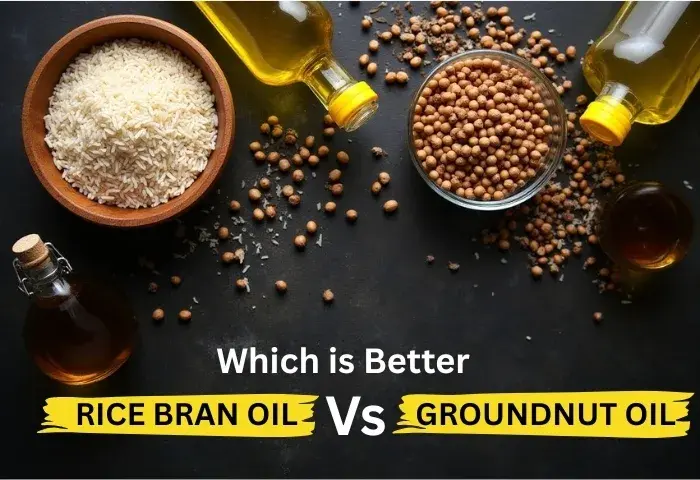
Introduction: Rice Bran Oil Vs Groundnut Oil
The Indian kitchen is filled with various oils like rice bran oil, sunflower oil, groundnut oil, and palm oil. Among these, groundnut oil is one of the oldest oils that has been used in kitchens. However, around 2012, a new name, rice bran oil, started getting famous in the Indian oil market.
Rice bran oil is an oil that is produced by extracting oil from the bran of rice grain, while groundnut oil is produced from extracting oil from groundnuts.
In this blog, we will discover the pros, cons, and insights regarding which oil is better, rice bran oil or groundnut oil.
Nutritional Comparison: Rice Bran Oil Vs Groundnut Oil
Rice Bran Oil Nutrition
Nutritional value of rice bran oil per 100 grams, according to Natural Nine:
| Calories | 884 kcal |
| Cholesterol | 0 mg |
| Vitamin E (alpha-tocopherol) | 50 mg |
| Vitamin K (phylloquinone) | 24.7 mcg |
| Saturated Fatty Acids | 22 g |
| Monounsaturated Fatty Acids (MUFA) | 43 g |
| Polyunsaturated Fatty Acids (PUFA) | 35 g |
| Phytosterols | 1190 mg |
Groundnut Oil Nutrition
Nutritional value of groundnut oil per 100 grams:
| Calories | 884 kcal |
| Cholesterol | 0 mg |
| Vitamin E (alpha-tocopherol) | 15 mg |
| Vitamin K (phylloquinone) | 0 mg |
| Saturated Fatty Acids | 17 g |
| Monounsaturated Fatty Acids (MUFA) | 46 g |
| Polyunsaturated Fatty Acids (PUFA) | 32 g |
| Phytosterols | 1190 mg |
Smoke Point & Cooking Uses
Smoke Points
- Rice bran oil: It has a very high smoke point, which is good for deep-frying, stir-frying, sautéing, and grilling. It can resist temperatures up to 450°F (232°C) without breaking down or emitting toxic fumes.
- Groundnut oil: Groundnut oil smokes at about 450°F (232°C). It’s good for stir-frying and deep-frying. It’s heat-resistant and smoke-free. It has the same smoke point.
Cooking Methods
-
Frying
- Rice bran oil: Its light, neutral flavour ensures it doesn’t overpower the taste of the food. It also absorbs less into food, making it a healthier option for repeated frying
- Groundnut oil: Popular for frying Indian snacks like pakoras and pooris, thanks to its stable structure and rich, nutty undertone.
-
Sautéing & Stir-Frying
- Rice bran oil works well for stir-frying vegetables, meats, or Indo-Chinese dishes due to its clean taste and ability to handle medium-high heat.
- Groundnut oil, with its slightly nutty flavour, enhances the depth of Indian curries, sautéed dals, and South Indian tarka.
-
Baking
- Rice bran oil is a better option for baking where a neutral-tasting fat is required, such as in cakes, muffins, or bread.
- Groundnut oil may impart a mild flavour, so it’s best used in baked goods that complement its taste, like peanut cookies or nutty brownies.
- Rice bran oil is a better option for baking where a neutral-tasting fat is required, such as in cakes, muffins, or bread.
-
Indian Cooking Styles
- Tadka/Tempering: Groundnut oil performs well in high-heat tempering for dals, chutneys, and sabzis.
- Curries & Gravies: Rice bran oil balances heavy spices and creamy gravies with its neutral profile.
People Also Read: Discover Diwali Special Snacks made with Rice Bran Oil
Advantages and Disadvantages of Rice Bran Oil
Advantages of Rice Bran Oil
- Heart-Healthy: Rice bran oil has cardiovascular benefits. It has a good mix of saturated, monounsaturated, and polyunsaturated fats. It’s heart-healthy because it’s low in trans fats and cholesterol.
- High Smoke Point: Its high smoke point is one of the benefits of rice bran oil. It can resist temperatures up to 450°F (232°C) without breaking down or emitting toxic fumes. This allows for deep-frying, stir-frying, sautéing, and grilling.
- Neutral Flavour: Rice bran oil tastes mild and neutral. It lets dishes’ inherent flavours shine through. This makes it a flexible cooking oil for many cuisines.
- Rich in Antioxidants: Rice bran oil contains antioxidants like tocopherols, tocotrienols, and gamma-oryzanol. Antioxidants fight free radicals and oxidative stress, which cause disease and ageing. Rice bran oil improves health.
- Nutrient-Rich: Rice bran oil contains vitamins, phytosterols, and fatty acids. Antioxidant vitamin E boosts immunity and skin health. Fatty acids and phytosterols reduce cholesterol.
- Long Shelf Life: Rice bran oil lasts longer. Natural antioxidants keep it fresh. It can be stored longer without deteriorating.
Disadvantages of Rice Bran Oil
- May trigger allergic reactions in people sensitive to rice, as it can contain trace amounts of rice proteins.
- Slightly higher in calories than some other oils, so it’s best to use it in moderation if you’re watching your calorie intake.
- Its mild, neutral taste might not appeal to those who prefer oils with a stronger flavour profile.
- It can be a bit pricier than more common cooking oils, which may affect your grocery budget.
- Not always easy to find, especially in smaller towns or local stores, where availability can be limited.
People Also Read: Rice Bran Oil Vs Mustard Oil
Advantages and Disadvantages of Groundnut Oil
Advantages of Groundnut Oil
- Heart-Healthy: Heart-healthy monounsaturated and polyunsaturated fats are balanced in groundnut oil. These fats cut LDL cholesterol and heart disease risk.
- High Smoke Point: Groundnut oil smokes at about 450°F (232°C). It’s good for stir-frying and deep-frying. It’s heat-resistant and smoke-free.
- Neutral Flavour: Groundnut oil tastes neutral. It lets other ingredients shine without overpowering recipes. It’s versatile and suitable for many dishes.
- Rich in Vitamin E: Groundnut oil contains antioxidant vitamin E. Vitamin E protects against free radicals, improves skin health, and boosts immunity.
- Nutrient-Rich: Groundnut oil contains phytosterols, which decrease cholesterol, and resveratrol, an antioxidant and anti-inflammatory. It contains minor levels of vitamin K, magnesium, and copper.
- Long Shelf Life: Antioxidants in groundnut oil extend its shelf life. Its long shelf life makes it ideal for culinary use.
Disadvantages of Groundnut Oil
- It could trigger allergic reactions in people with peanut or legume allergies, so it’s best avoided in those cases.
- High in calories and fats, which means portion control is key if you’re managing your weight or daily intake.
- Not the best fit for strict paleo or keto diets, as it may contain slightly more carbs than some other oils.
- Risk of adulteration exists, especially with cheaper or poorly stored options—so always choose reputable brands.
People also read: Sunflower vs soybean oil: Interesting facts to make you healthier
Which suits you best?
The answer to which oil suits you the best depends on many factors. What your current health condition is, what your future goals are, or whether you are just choosing for the taste.
So, if you are someone who has heart trouble or cholesterol problems, or you want to be fitter, then rice bran oil is a better choice for you. However, if you are looking for a neutral-tasting oil with slightly fewer health benefits, groundnut oil is a better option.
Conclusion: Which is Better, Rice Bran Oil or Groundnut Oil?
Rice bran oil and groundnut oil both have their benefits, but choosing the best one depends on your preferences. These preferences include method, health goals, and taste.
Trial and error can be a good thing while choosing something to add to your food, so try both the oils in different cooking methods and choose the one that you like the best.
Still confused? Contact SVR Gaia to know more about these oils.
People Also Ask
1. What is the disadvantage of rice bran oil?
There is no particular disadvantage of rice bran oil, unless you are allergic to it.
2. Which one is better, rice bran oil or sunflower oil?
Both oils are good; it depends on the person’s taste and health concerns. Rice bran oil has oryzanol content, which is good for the heart, while sunflower oil is rich in vitamin E and linoleic acid.
3. Is rice bran oil good for deep frying?
Rice bran oil has a high smoke point, so it is considered to be good for deep frying.
4. Is groundnut oil good for health?
Yes, groundnut oil is good for health if consumed in moderation. It’s a good source of monounsaturated and polyunsaturated fats, which are considered healthy fats.